
Woven Patch vs Embroidered Patch – Which One Is More Durable?
September 19, 2026
How to Choose the Right Standard Patch Size for Custom Design
September 21, 2026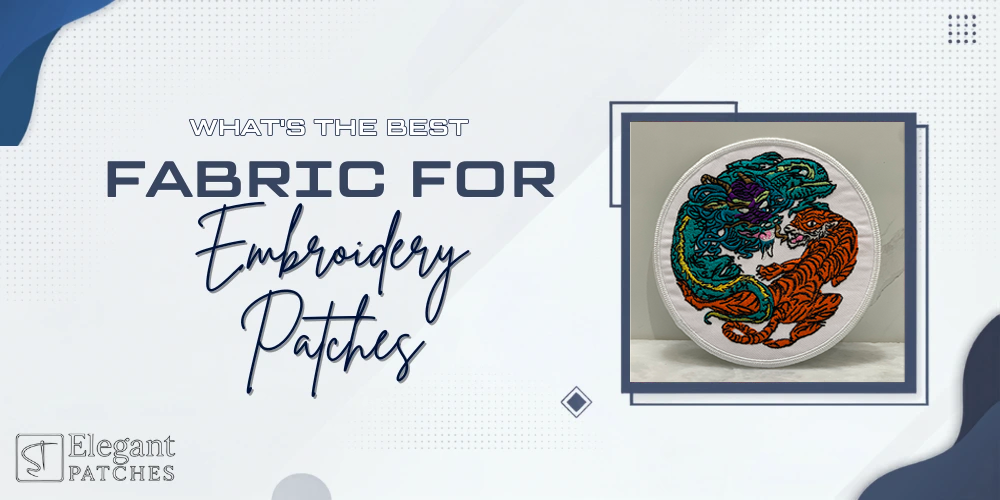
Best Fabric for Embroidery Patches: What to Choose and Why
Twill. That’s the short answer. Polyester twill is the best fabric for embroidery patches in most situations, and it’s what the majority of patches you’ve seen were stitched on. But the right pick changes once you factor in the look you want, the garment it’s going on and how hard it’ll be worn.
Here’s how to choose the base fabric, what to sew it onto and the mistakes that ruin good designs.
What is the best fabric for embroidery patches?
Polyester twill is the best all-round fabric for embroidery patches. Its tight diagonal weave holds dense stitching without puckering, resists shrinking and fading, and survives repeated washing. Choose felt for a soft vintage look, canvas for rugged gear, and wool for letterman-style badges.
That covers about 90% of orders. The rest of this guide is for the other 10%, and for anyone who wants to know why.
Two fabrics, two decisions
People mix these up constantly, so let’s separate them.
- The base fabric is what the patch itself is built on. The thread gets stitched into it.
- The garment fabric is what you attach the finished patch to: a denim jacket, a cotton polo, a nylon backpack.
Both matter. A perfect twill patch still peels off a slick rain jacket if you pick the wrong backing. Most of this article is about the base. The garment part comes further down.
Embroidery patch materials compared
Base fabric | Best for | Detail | Durability | Feel | Watch out for |
Polyester twill | Almost everything: uniforms, logos, merch | High | High | Smooth, firm | Nothing major |
Cotton twill | Vintage or natural look | High | Medium-high | Softer, matte | Can fade faster |
Felt | Varsity, school, craft, soft designs | Low-medium | Medium | Thick, fuzzy | Fine text can get lost |
Canvas | Workwear, bags, outdoor gear | Medium | High | Rugged, textured | Slightly rough finish |
Wool | Letterman jackets, traditional badges | Low-medium | Medium-high | Warm, thick | Costs more, bulkier |
Let’s go through each one.
Polyester twill
Twill has a diagonal weave that gives the patch a firm, smooth backbone. Dense embroidery sits on it without pulling or bunching. Polyester versions barely shrink and hold color well, which is why brands, clubs and workwear buyers keep ordering them.
If you order a custom embroidered patch without specifying a fabric, this is almost certainly what you’ll get.
Cotton twill
Same weave, different fiber. Cotton twill feels softer and looks a little more natural, so it works for heritage brands and vintage-style designs. It’s slightly more prone to fading after many washes.
Felt
Felt is thick and soft, with no weave lines showing. It’s the classic choice for school and varsity patches. The downside is detail. Small text and thin lines can look muddy on felt, so keep the design bold and simple.
Canvas
Canvas is tough. It suits patches that live on backpacks, work jackets, hunting gear and tool bags. The texture is coarser than twill, so it’s not the pick for crisp, tiny lettering.
Wool
Wool gives that old-school varsity look. It’s warm, thick and holds its shape wash after wash. It costs more and it’s bulky, which makes it a poor fit for small patches on caps.
Fabrics you’ll see mentioned but rarely need
Silk, acetate and polyurethane pop up on plenty of “best fabric” lists. In practice, silk is too delicate for patches that get worn and washed. Acetate isn’t standard. Polyurethane is more relevant to printed or PU-coated patches than to a traditional embroidered base. If a list pads itself with these, treat it with suspicion.
Which fabric fits your use case?
Match the patch to how it’ll actually be used.
- Uniforms and workwear. Polyester twill with a merrow border. It survives industrial washing and daily friction. For a name badge or company logo that needs to look identical across 200 shirts, consistency matters more than texture.
- Bikers and jackets. Twill for back patches with lots of detail. Canvas works if you want a rougher, more worn look. Sew-on backing is the safe choice for leather.
- Military, law enforcement and tactical. Twill or nylon-based patches with hook and loop backing. Always check your unit’s regulations on size, color and placement before ordering.
- Sports clubs and schools. Felt or wool for the traditional feel, twill if you need sharper logos and lettering.
- Brands and merch. Twill, nearly always. It photographs well, keeps color consistent across reorders and pairs with any backing. Custom woven patches are worth a look if your logo has very fine detail or small text.
- Events and giveaways. Lightweight twill with iron-on backing. Quick to apply and cheap enough for a large batch.
It’s not just fabric: thread, coverage, border and backing
Base fabric is one piece. Three other choices change how the finished patch looks and lasts.
Stitch coverage. On a full-coverage patch, thread covers the whole surface and the fabric never shows. The base matters less visually but still affects stiffness and edge quality. On a patch with open areas, the twill shows through, so its color and weave become part of the design.
Border. A merrow border wraps thread around the edge and gives the classic rounded, finished look. A laser or hot-cut edge is cleaner and better for odd shapes. Ask which one your design suits.
Backing. This decides how the patch stays on:
- Sew-on: longest lasting, works on nearly any fabric. See our sew-on patches.
- Iron-on: fastest to apply, best on cotton and denim. See our iron-on patches.
- Hook and loop: removable, common for tactical and rotating name tapes.
Not sure which to pick? Our iron-on vs sew-on comparison walks through it.
What fabric should you put patches on?
Quick answer: Denim, twill and canvas are the best garment fabrics for patches because they’re sturdy and hold both sewn and heat-applied patches securely. Cotton works well for casual wear. Stretchy knits, silk and slick synthetics need extra care, usually a sew-on patch with a stabilizer underneath.
Here’s how it plays out in practice:
- Denim and canvas: Nearly foolproof. Iron-on or sew-on both work.
- Cotton tees and sweatshirts: Iron-on works, but add a few stitches around the edge if the garment gets washed constantly.
- Leather: Skip the iron. Sew on, or use a leather-safe adhesive.
- Fleece and knits: Sew on. Heat can flatten fleece and stretch will crack an adhesive layer.
- Nylon and polyester jackets: Test first. High heat can melt or warp technical fabrics, so sew-on or hook and loop is safer.
Common mistakes
- Choosing felt for tiny text. It blurs. Use twill.
- Ironing on synthetics without a test. One scorch mark and the garment’s ruined.
- Ordering too small. Detail needs room. A crowded 1.5-inch patch will look messy on any fabric.
- Skipping the digital proof. Always check a sew-out or proof before production starts.
- Ignoring the wash. If it’ll be laundered weekly, go polyester twill with sew-on or stitch-reinforced backing.
- Thin borders on soft fabrics. Felt and wool need a sturdier edge to keep their shape.
How to care for embroidered patches
Turn the garment inside out. Wash cold or up to 30°C (86°F). Skip bleach. Air-dry when you can, because high dryer heat weakens iron-on adhesive over time. If a corner lifts, a few hand stitches fix it faster than re-ironing.
Ordering patches in the USA, UK and beyond
Wording changes by country, and it affects how you search and what you write on your order. In the UK, embroidered patches are often called badges, so “sew-on badges” and “embroidered club badges” are common terms. Sizes get quoted in inches for US orders and in millimeters or centimeters for UK ones, so state your unit clearly.
For US military and law enforcement, hook and loop is standard on many uniforms. In the UK, clubs, cadet groups and scout troops often specify sew-on. Check your organization’s rules before you finalize size and backing.
Elegant Patches ships to the US, UK and worldwide, with no minimum order, so you can order one sample or a full team run.
Frequently asked questions
- What fabric is used for embroidered patches?
Most embroidered patches use polyester twill as the base. Cotton twill, felt, canvas and wool are the main alternatives, chosen for look, texture or durability rather than because they’re “better” overall. - Is twill or felt better for patches?
Twill is better for detail and durability. Felt is better for a soft, vintage or varsity look. If your design has small text or fine lines, choose twill. - Do embroidered patches shrink when washed?
Polyester twill barely shrinks. Cotton can shrink slightly, and wool and felt are more sensitive to hot water. Cold washing avoids most problems. - Can I iron a patch onto nylon or a polyester jacket?
Sometimes, but it’s risky. Heat can melt or warp technical fabrics. Test on a hidden spot, or use sew-on or hook and loop backing instead. - What’s the strongest backing for a patch?
Sew-on. It’s physically stitched to the garment, so it outlasts heat-activated adhesive on most fabrics. - Can I put a patch on stretchy fabric?
Yes, but sew it on and use a light stabilizer behind the fabric. Adhesive tends to crack when the fabric stretches. - What’s the difference between a patch and a badge?
Nothing in practice. “Badge” is the more common UK term, “patch” the more common US term. Both usually mean the same embroidered item. - Is there a minimum order for custom patches?
Elegant Patches lists no minimum order, so you can order one patch or hundreds.
The bottom line on the best fabric for embroidery patches
For most people, the best fabric for embroidery patches is polyester twill. It’s stable, detailed, durable and consistent. Pick felt or wool when you want a traditional texture, and canvas for rough use.
Then match the backing to the garment. That pairing matters as much as the fabric.
Ready to see it in real thread? Start with our custom embroidered patches, or browse woven patches if your artwork has very fine detail. Planning your own designs? Our blank patches are a good base to embroider on. Send your artwork for a quote and digital proof before you commit.
Custom Products
Recently Added Blogs
The 10 Different Types of Lapel Pin Backings
How to Choose the Right Standard Patch Size for Custom Design
What’s the Best Fabric for Embroidery Patches
Woven Patch vs Embroidered Patch – Which One Is More Durable?
Step-By-Step Guide to Design Varsity Jacket Patches
PVC vs Silicone Patches – What’s the Difference?

Related posts